The Air Cargo World

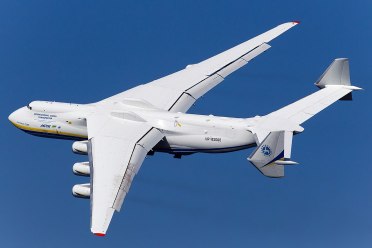
The largest air cargo plane in the world is the Antonov An -225 Mriya. This aircraft can carry 640 tons, and it is also the longest plane ever created. Its wingspan is 290 feet which is double the Wright Brother’s first plane of 120 feet. 1200px-Antonov_An-225_Beltyukov-1

The first air cargo flight took place in 1910 in the USA which was the Wright Model B airplane that carried silk for 65 miles. The silk business decided to use the plane for marketing purposes instead of actual transporting the goods since the store had just opened. The silk was cut into small pieces and glued onto postcards for souvenir purposes. But as the years went by the demand of air cargo transportation greatly increased.

Airbus created the Beluga. This aircraft might be the weirdest of all airplanes so far but it’s unique design provides 14,000 cubic meters of space which is roughly 36 cars.

Heading-AirbusBeluga-001

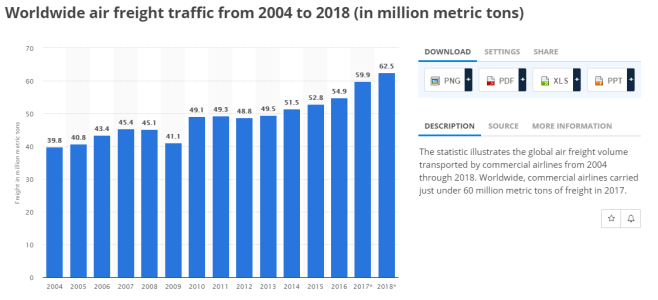
The air cargo world transports yearly more than 51.2 million tons of freight and reached about 60 million metric tons of freight in 2017. This would be way more than 100,000 Antonov An-225 planes.

6687

The highest share of airborne trade tonnage consists of the following commodities: computing equipment, machinery and electrical equipment. Animals and flowers are also a huge commodity demand for the air cargo world.

Large Cargo Freighter Arrival at Boeing Field

Written by Iris Arden (Ramon Inc.)

Sources:

https://www.statista.com/statistics/564668/worldwide-air-cargo-traffic/

http://www.boeing.com/resources/boeingdotcom/commercial/about-our-market/cargo-market-detail-wacf/download-report/assets/pdfs/wacf.pdf

DHL Cargo Shipping – New Strategy

DHL has announced same-day delivery and next-day delivery for online retailers. This service was created to compete with Amazon, FedEx, UPS, and the U.S. Postal Service. The Parcel Metro service, according to DHL, is a network of delivery vendors and sourced drivers and vehicles. This will help ensure capacity and flexibility in last-mile deliveries. This new strategy for delivery is being testing already in Atlanta, Dallas, San Francisco, and Washington D.C.

The software used by DHL allows them to find the best drivers for each route. The client can choose from several delivery times and preferred address for delivery. The customers can also track the goods in real-time, send instructors to the carrier, reschedule a delivery, and rate the experience. Retailers can customize the software mobile interface to show their business information to clients.

For DHL, according to the U.S. Census Bureau, e-commerce sales grew 16% in 2017 while total retail sales grew 4.4%. The results are already showing with DHL’s new business strategy. Remember that cargo insurance is important for all types of cargo, especially retail. Ramon USA provides the best rates and coverage for retail types. Please feel free to contact us for more details.

By Iris Arden (Ramon Inc.)

Source: http://www.ttnews.com/articles/dhl-launches-same-day-delivery-e-commerce-merchants

Full Replacement Value and Cargo Liability Insurance

Understanding the difference between Freight Insurance and Freight Liability is a crucial part of the freight and/or logistics industry, especially in an unfortunate event that you need to process a claim. The questions you should be asking yourself is what is the covered by the liability, what is covered by the freight insurance (Full Replacement Value Called All risk that we offer), and what is the difference.

The key point here is to analyze what is the extent of the carrier’s liability for freight loss under the applicable law and/or coverage, and what is the extent of the carrier’s freight insurance protection for that liability.

For example, there are three types of coverage offered by Ramon Inc. One of the coverage is called ALL RISK. This policy covers ANY damages while in transit. This includes damages from physical external cause along with partial or total, theft and catastrophe. This means that if the goods are not covered by All Risk then the insured/shipper is relying solely on the carrier’s contingent liability policy for insurance coverage should there be damage or loss during transit. Since it is a liability policy, the carrier is protected by statue and subsequently limited on their liability to pay claims. This affects the level of individual contract of carriage which was entered by the shipper and carrier. If the shipper imposes any commercial pressure on the carrier, or if the carrier is guilty of gross negligence, or the transit is subject to the Carmack Convention for interstate shipments in the US, then the limited liability of the carrier may be challenged.

Please keep in mind that in case of a claim and relying upon the carrier’s cargo liability insurance, you will be faced with an expensive and timely process that will ultimately involve lawyers and added expenses that accrues. Usually in a claim case, a carrier’s limit of liability is only $1,500. Most of the time customers are lead to believe that the trucking insurance general liability of $100,000 covers their cargo for full replacement value. This is not the case. The $100,000 covers them for all the loads that they haul. Within the fine prints of the contract of carriage, they have a limit of liability of $1,500 per claim. Just like ocean vessels have $500.00 limit of liability per container even if the goods in the container are valued at $500,000. The same with all airlines, they have limit of liability per luggage and/or cargo they carry on-board.  Therefore, Ramon Inc. with more than 31 years of experience in the market strongly advises everyone within the industry to check all the details/information prior to booking cargo insurance with any company or relying on the trucking company’s cargo insurance policy. This policy is simply a mandatory requirement by the DOT for any trucking to operate, and it is very limited.

Please contact us today or get a quote here http://www.freightinsurancedirect.com

Written by Iris Arden (Ramon Inc.)