Shipping with Amazon & Shipping Insurance

Amazon has been launching new ideas. From the virtual store that needs no cashiers, to the delivery service that doesn’t need anyone home to receive a package (Amazon Key), and now they have announced SWA – Shipping with Amazon. How can Shipping exist without shipping insurance.

The company already expanded its ocean freight, cargo planes, plans for drone delivery, and is now ready to compete with companies like Fedex and UPS. Amazon already delivers its own orders to 37 cities in America, and they are planning to expand even further.

41% of online shopping comes from Amazon. Amazon’s policy guarantees quick and fast delivery of their online products, and their prices are the lowest in the market. Amazon has already invested $13.2 billion on warehouses and other logistics buildup for its operations in America.  The massive amount of shipments will require shipping insurance as with no doubt as the volume grows the amount of claims increases.

Amazon plans to expand even further as they also continue to invest overseas.  Their plans are yet to be announced but in the meantime, we urge customers to minimize risks by securing their packages with shipping insurance.

http://www.wsj.com/video/is-amazon-going-to-rule-the-world/23F6CE12-D9F4-4E7D-A2DC-F85054F4C475.html

Written by Iris Arden (Ramon Inc.)

Shifts in the Trucking Industry

Due to mother nature, there have been major delays in shipping freight. But this has also created a vicious cycle. Either the shipment cannot be sent on time due to the weather, or the shipment that was shipped on time was damaged during the transit. Shipping carriers find themselves overwhelmed with the high volume of freight that needs to be sent due to high demand, and the high volume of claims that are being processed.

Carriers’ that only have a shipping insurance policy that only coverage few cents per pound and NOT full replacement value, finds themselves facing a nightmare. The claims process seems to never reach a resolution; they still have more goods to ship, yet the risk of damaging the goods again during transit is high.

That’s why Ramon Insurance has been in business for over 31 years. We provide the best claims process, with 24-7 updates, easy to communicate, and resolutions are given in just 7 days. The rates provided for the best in the industry and the coverage is the best available which is All Risk and Full Replacement Value. We not only make the process quick and easy for you, but we give you the best for your time and money. The best customer service, the best rates, the best coverages, and the best claims processes. Few cents per hundred will give you the peace of mind from pick up to delivery.

Contact us today for free consultation  by an expert who has been insuring billions of dollars of freight every year.

Written by Iris Arden (Ramon Inc.)

The Challenges of Transportation Today

Regardless of the era, people moved. Whether if you were a Viking that navigated the seas, the Chinese that invented the compass, or the Arab that invented the kamal, people found ways to move from one place to another.

In America, the Dwight D. Eisenhower National System of Interstate and Defense Highways was built forming the National Highway System of the United States today. In 1992, they declared the project completed, but there are a lot more challenges and new projects to overcome. The whole route has a total of 47,856 miles, one-quarter of all vehicles use the interstate system and the cost of construction in 2006 was $425 billion.

CarTraffic-637406498.jpgNow let’s take into consideration the cost for traffic. It costs $124 billion a year. And the cost of traffic will increase to $186 billion in 2030. With the American population growing 3.3 million per year according to the Census Bureau’s decennial census, finding positive solutions to decrease traffic becomes a major challenge.
Some studies convey that the urban population by 2030 will be 60%. If right now we already face major traffic, imagine by 2030.

Other countries have implemented strategies to decrease traffic. For example, Cheonggyecheon Stream in Seoul had a 16-lane freeway. They removed the freeway which decreased traffic, increased public transportation, and brought environmental improvements to the city.

In America, a few cities are trying to improve their public transportation infrastructure, but there are still projects concentrated on developing more highways. For example, in Dallas, the Texas Department of Transportation mentioned a study to remove the bandwagon freeway, but they are already planning a $100 million renovation project of the freeway.

Written by Iris Arden (Ramon Inc.)

Sources:

https://www.forbes.com/sites/federicoguerrini/2014/10/14/traffic-congestion-costs-americans-124-billion-a-year-report-says/#75ddda04c107

https://www.politico.com/agenda/story/2015/07/robert-puentes-proposes-new-american-transportation-policy-000160

Rail Delays to the Port of New York and New Jersey

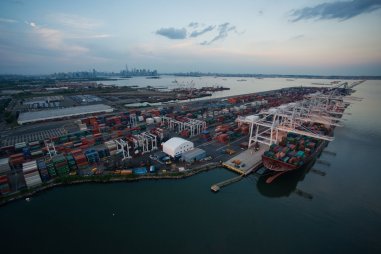
The ports of New Jersey and New York are America’s busiest and largest ports of the Eastern coast. They are the nation’s third-largest port and offer access to one of the most concentrated consumer markets in the world. Twenty-foot equivalent or TEU, which is the cargo capacity unit to describe shipping containers, in 2015 was 4.9 million composing 12.1% of the North American market share.

BN-MI861_2cCDr_M_20160129140819The weather conditions delayed the cargo transit from Chicago and the Midwest to the ports causing major disruptions. CSX who services into the ports had discontinued services and destinations along with eliminating 6,700 employees and consultants. Express Rail Terminal became overwhelmed with the number of containers. And what use to take thirty minutes to access a container now takes an hour and a half.
Attempts to find a better solution to correct the problem do not show any signs of a quick recovery.

Written by Iris Arden (Ramon Inc.)

Sources:

https://www.icontainers.com/us/2017/05/16/top-10-us-ports/

https://www.morethanshipping.com/ports-new-york-new-jersey-cope-rail-delays/?lipi=urn%3Ali%3Apage%3Ad_flagship3_feed%3Bv86CvceMQDKk8xFdOnCf3w%3D%3D

Space Cargo Transportation

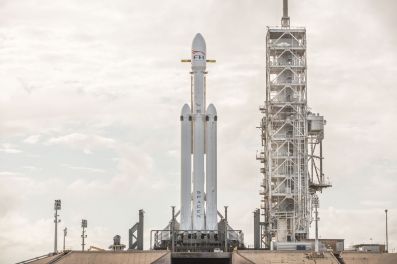
38583829295_d658ecb02f_o.0As the countdown begins, Falcon Heavy is preparing itself for it’s mission to mars. The Falcon Heavy is the most powerful rocket in operation in the world today, and its cargo today is a cherry red Roadster from Tesla. The goal of SpaceX is to send people to mars; but for now, the car will do an elliptical orbit around the sun that extends as far out as Mars.

One of the challenges would be the take off. Secondly, the boosters landing back on Earth within the designated areas, and Van Allen radiation belts will be a challenge. The Van Allen belts could cause electrical glitches.

The Falcon Heavy for now would haul cargo for NASA to the International Space Station and place communications satellites in orbit, but the aim would be to go beyond that.  They are hoping to take astronauts to the moon soon and one day ultimately reach their goal Mars.


Written by Iris Arden (Ramon Inc.)

Source: https://www.nytimes.com/2018/02/06/science/falcon-heavy-spacex-launch.html